The Uncomfortable Truth About Case Studies
Why Poorly Chosen Case Studies Undermine Business Relationships and How to Choose Ones That Stand. My article for Web Performance Calendar.
Materials from my talk at Performance.Now 2026.
Thanks for listening. Here are questions for the first meeting about speed and the funnel we guide clients through. Only part of the presentation fits here; I'm transcribing the full version into an article on the PageSpeed.ONE blog.
Receive the full article from the presentation. One email per month about website speed. Unsubscribe anytime. Privacy Policy
Sales isn’t about pushing. It’s about understanding needs and removing obstacles. That’s why we start every initial speed meeting with questions, not offers. This approach works for clients and colleagues whose approval you need.
What Prompted You to Contact Us? motivation
Are they here because they know a specific issue, or do they want a strategic solution? Is their boss pushing them, or do they have the numbers?
How Would Better Speed Change Things for You? KPI
You're looking for impact that matters to them: more orders, lower cost per click, fewer customer complaints.
How will we know it worked? metrics
Agree in advance on how to measure success, or everyone will see it differently in the end.
Who approves the budget? stakeholders
Are you talking to the person who decides the budget? If not, find out who it is and see if you can meet them.
Who will implement the changes? partners
In-house developers, an agency, or a platform provider? Without them, even the best analysis stays unused.
What investment seems realistic to you? budget
An open budget discussion saves both sides from a proposal that ends up in the trash.
What will it cost, including developer and analyst time? full budget
Our invoice is just part of the cost. The internal team's time is often greater and frequently overlooked.
Why Now and Not Later? timing
Season, redesign, platform migration. Timing is as crucial as strong arguments.
Could this break something, like analytics or tracking? concerns
Everyone has concerns. If you don't voice them, it might quietly end the collaboration.
A company doesn't commit to long-term speed collaboration with just one convincing argument. It goes through eight steps, each requiring something different. This is the funnel we use at PageSpeed.ONE.
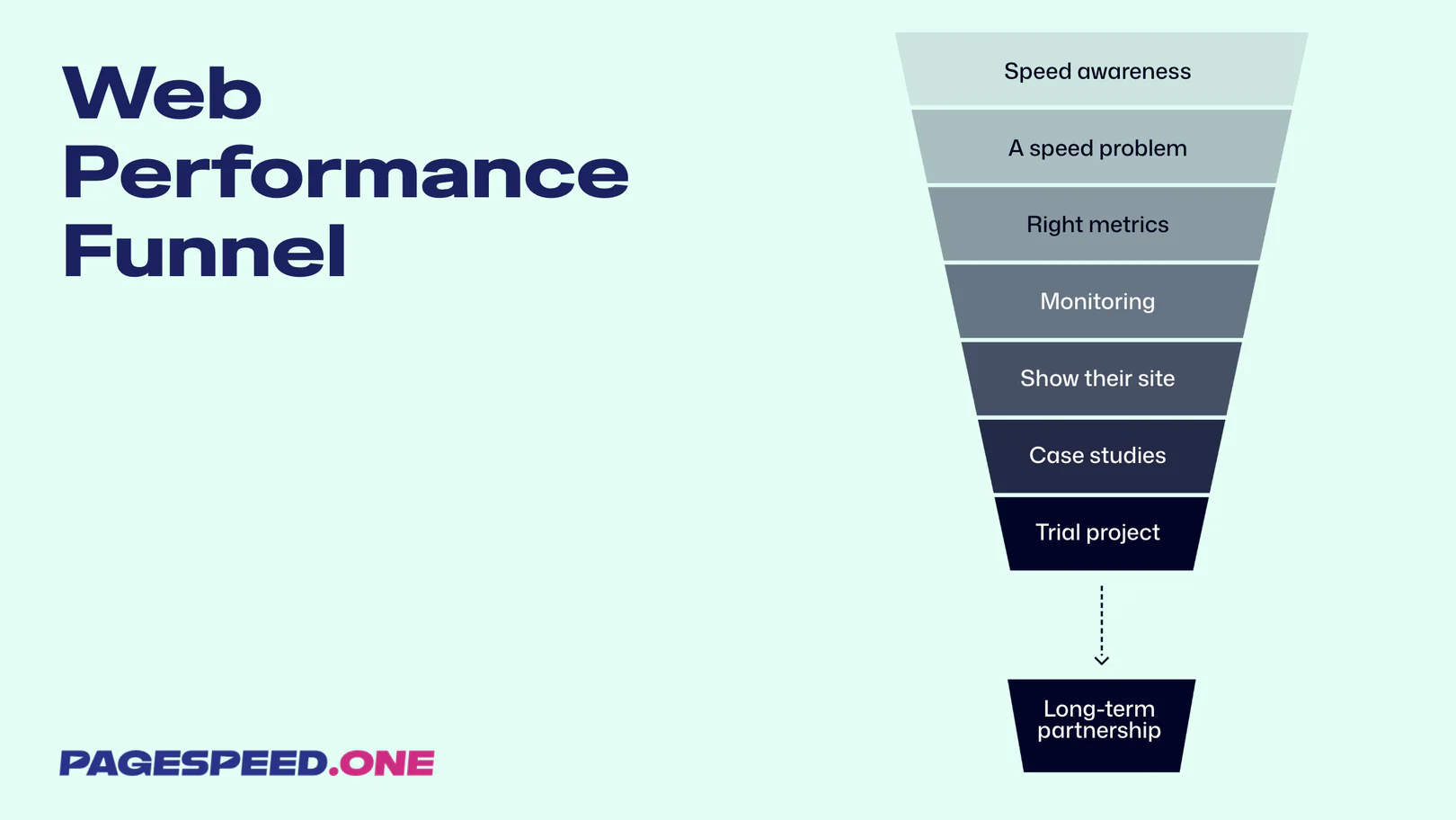
What each funnel step means, one by one. A short note for every stage, so you can take it with you even without the slide.
Why Poorly Chosen Case Studies Undermine Business Relationships and How to Choose Ones That Stand. My article for Web Performance Calendar.
Optimizing Core Web Vitals on Shoptet increased Google visits by 17% compared to the model. This is our data-driven study I discuss in the talk, showing clear evidence of speed's impact.
A quick community survey for anyone who has ever fought for a speed budget. It takes about three minutes. I'll publish the results in an article for the lecture and send them to everyone who leaves their email.
What You’ll Gain:
Know someone who struggled to secure a speed budget? Send them this page.

He has built websites since 1997 and worked on speed since 2018. At PageSpeed.ONE he leads sales, with more than 250 conversations about speed behind him.
martin.michalek@pagespeed.cz