SIKO Case Study: 2.5x Faster Load Times and 7x Better Layout Stability
SIKO is one of the largest bathroom and kitchen retailers in Central Europe, with an extensive e-shop in the Czech Republic, Slovakia, and Hungary.
Website speed is crucial for SIKO, but the new JavaScript-based frontend showed significant issues with Core Web Vitals metrics.
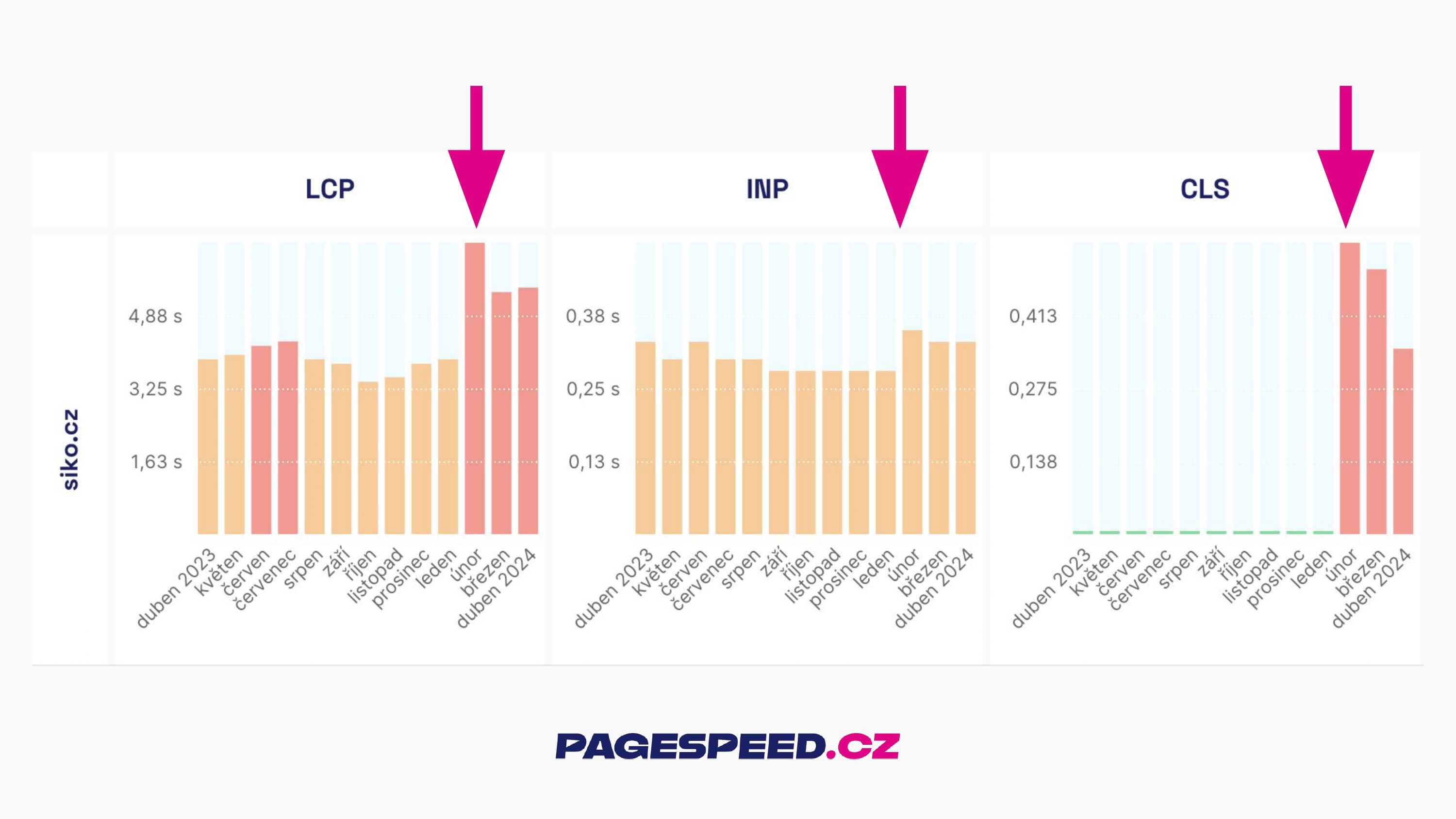 After launching the new site in February 2024, there was a decline in loading speed (LCP) and layout stability (CLS) on mobile devices.
Following the redesign, we worked with the SIKO e-commerce team to optimize the new site's performance.
How did we accelerate SIKO's website?
During the speed optimization process, we followed these steps:
- The SIKO team involved all key partners, including us, in a regular performance tuning process.
- We identified optimization opportunities, assigned them to developers, and maintained communication.
- We implemented speed monitoring complemented by SpeedCurve RUM.
- We reported the status to the client and shared our expertise.
Selected improvements achieved through cross-team collaboration:
- Partial transition from client-side rendering (CSR) to server-side rendering (SSR).
- Improved infrastructure settings (caching static resources, WebP images, Cloudflare implementation, etc.).
- Prevented duplicate rendering of the main image on product detail pages.
- Layout optimizations for headers, filters, and galleries on product detail pages.
- Continuous optimization of unwanted layout shifts (CLS).
- Optimized rendering of the main site navigation.
- Changed lazy loading implementation.
- Adjusted image settings in the CMS.
- Modified loaders and skeletons.
The graph shows the difference in load speed between server-rendered pages (SSR) and the original client version (CSR):
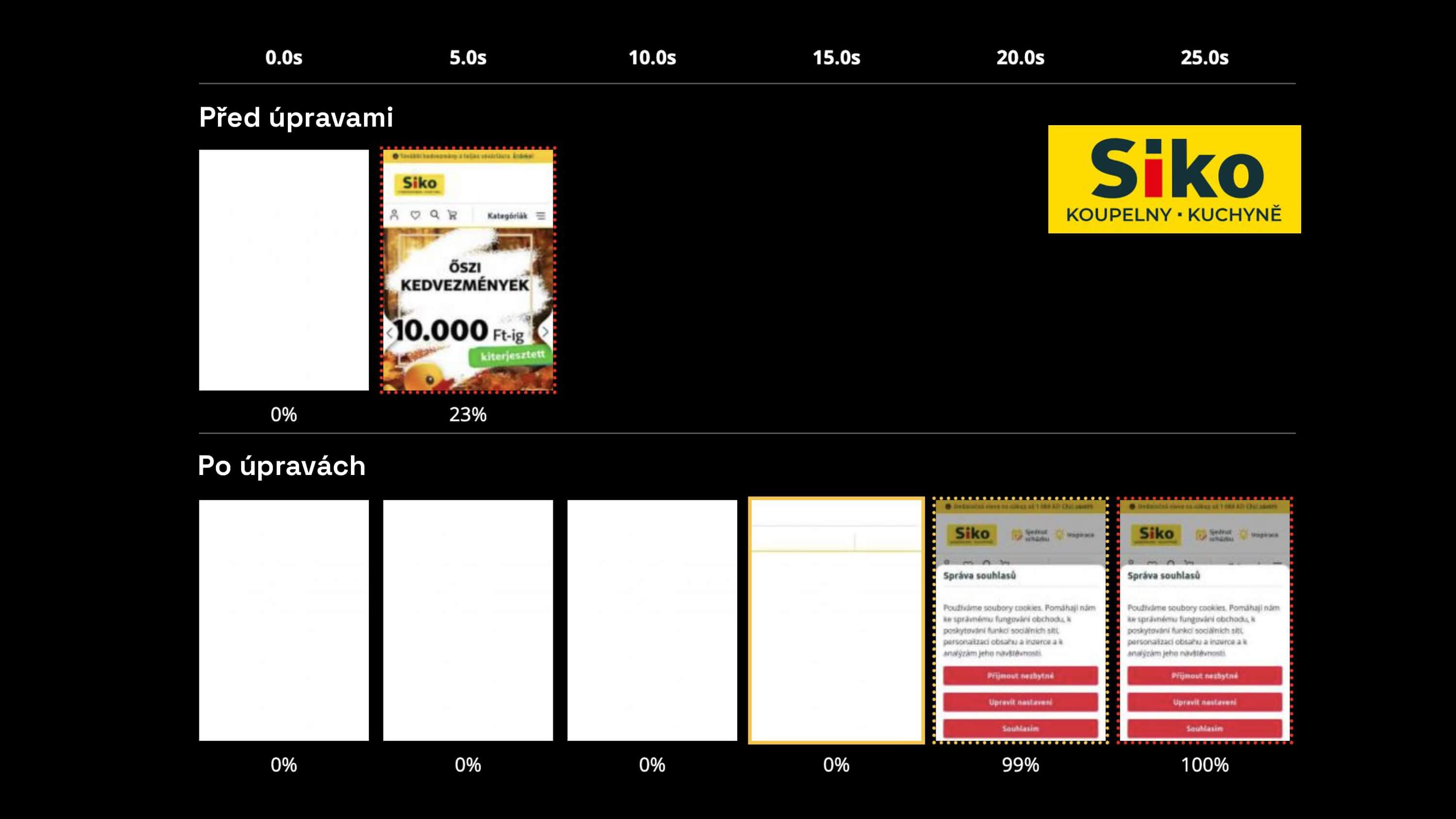 Thanks to SSR, pages can render significantly earlier—without waiting for JavaScript processing in the browser.
As a bonus, we fixed Google Analytics measurements at the start of our collaboration, which paradoxically didn't work due to excessive speed optimization.
Collaboration impacts
During a year of collaboration, we significantly improved key loading speed (LCP) and layout stability (CLS) through the involvement of all parties.
This wouldn't have been possible without excellent cooperation with the SIKO team, who were clear on priorities and business goals.
Martin Lipový on our collaboration:
“Rather than external consultants, we see PageSpeed.ONE experts as more experienced colleagues in performance, working in the same team focused on a functional and fast eCommerce site.”
Martin Lipový, Head of Online and Product Development
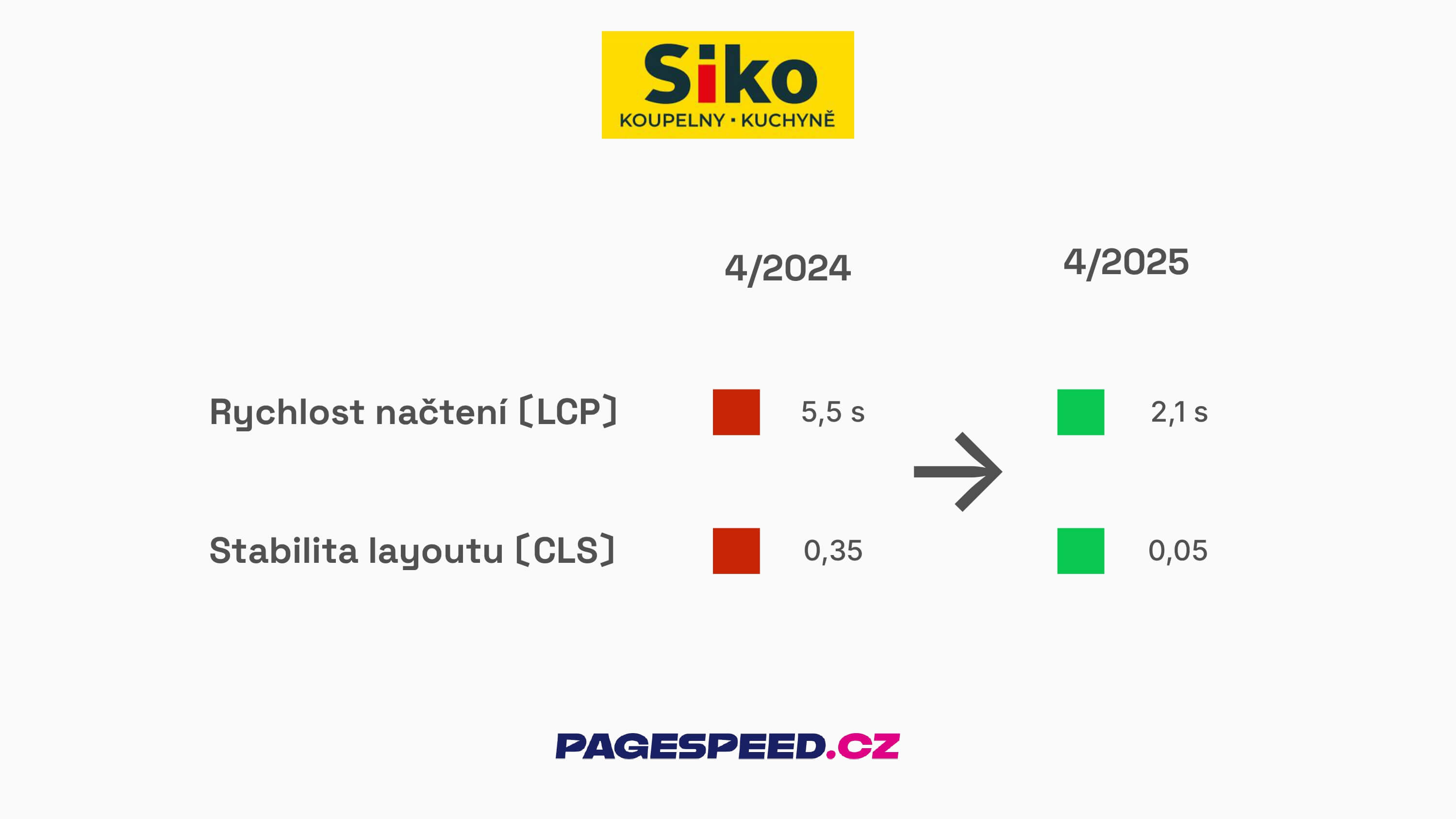 We improved loading speed (LCP) by 62% year-over-year and layout stability (CLS) by 86%.
It's not just about metrics; our collaboration also enhanced the overall user experience:
- More than 2.5 times faster loading on mobile (LCP).
- 7 times better layout stability (CLS).
- 2–5% lower bounce rate across different language versions.
- +17% increase in search impressions year-over-year (Source: Google Search Console Q1/2024 vs. Q1/2025)
Measure your website speed
The website speed test shows you the results straight away.
Work on speed never ends
After several months of intensive collaboration, we continue with smaller adjustments. We maintain regular contact, provide speed oversight for the client, and train the internal testing team as part of building a “speed culture.”
This collaboration with the SIKO team proved that even a heavily client-side JavaScript architecture can be significantly accelerated.
By speeding up the site and improving Core Web Vitals, SIKO gained a more stable starting point for marketing campaigns and expansion into new markets. Further optimizations await us—as a standard part of development.