Why Optimise Web Speed?
 Martin MichálekUpdated 2/11/20269 minutes reading
Web speed matters. Not just because Google says so.
The threshold of human perception for instantaneous interface response lies in the low hundreds of milliseconds. Most websites today struggle to meet this benchmark during loading, but every improvement counts.
Speeding up your website is likely to increase conversions, as countless case studies suggest. That’s why Google decided to support fast websites, resulting in speed potentially helping with traffic and even advertising costs.
 Google supports fast websites because speed impacts conversions. Also, because human patience isn't infinite.
Let's first take a deep dive into the psychology of human patience when interacting with user interfaces.
Psychology
When R. B. Miller conducted his first tests in 1968 to understand how users of the era's mainframe computers perceived terminal interface response times, he probably didn’t imagine that his study would remain a cornerstone in the field over fifty years later.
Among other things, he identified that the magical threshold at which we perceive interface responses as instantaneous is around 100 milliseconds.
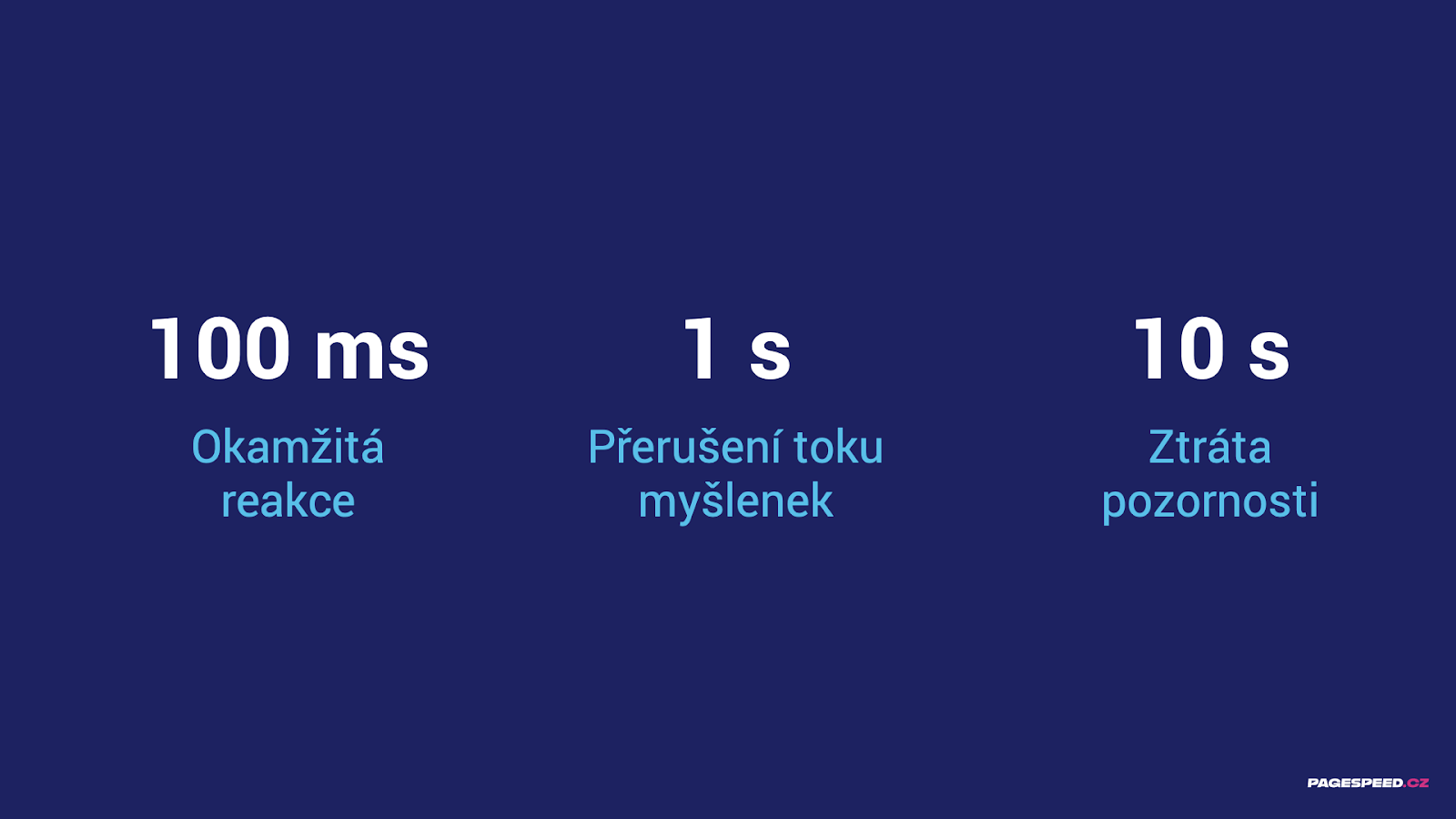
Mr. Miller would likely be quite surprised to learn that even in 2020, we haven’t mastered loading and rendering websites swiftly enough to prevent users from waiting anxiously. As users, we all unfortunately know we’re far from achieving sub-hundred millisecond performance with websites.
How to convince your boss or client of the importance of web speed? Here’s a concise PDF with the key arguments.
Technology has dramatically advanced from the days of mainframe terminals to modern web on smartphones, but human psychology has not.
From the setup of the human mind, it also follows that if you speed up a user interface, it will better achieve its goals.
Impact on Conversions
The connection between website speed and conversion rate stems from R. B. Miller's findings and others, as well as practical case studies that have been cropping up like mushrooms over the last decade.
All studies demonstrate that speeding up has positively impacted the business or goals of website owners.
Bounce Rate
"Bounce rate" is one of the most closely watched general analytics metrics. The prevailing belief is that by speeding up the initial rendering of a website, we also improve the bounce rate.
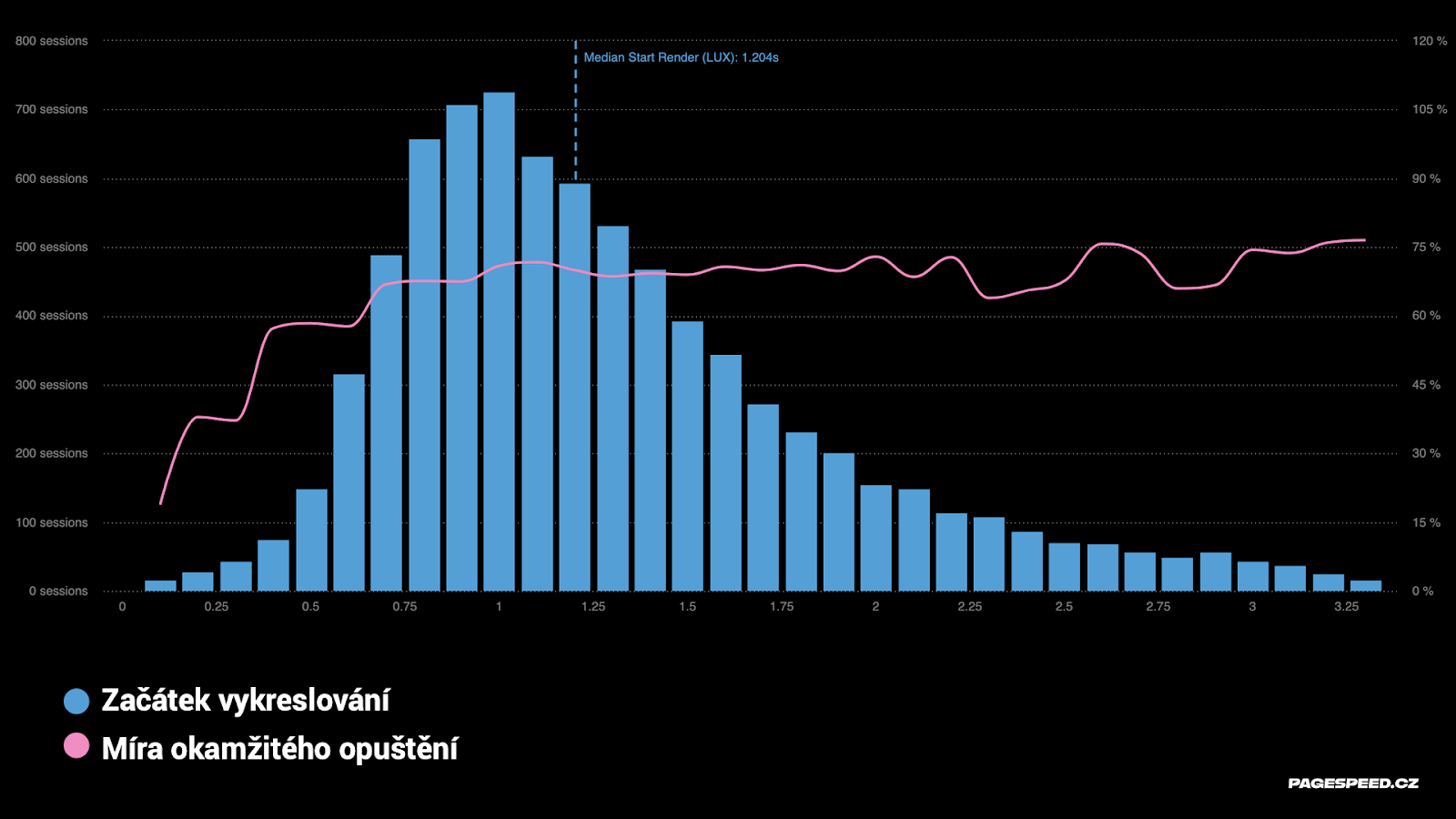 Correlation between speed and bounce rate example (Source: SpeedCurve)
For examples of the impact of speed on bounce rate, we look worldwide:
- 53% of visits are likely to be abandoned if a page takes more than 3 seconds to load. One of the most well-known case studies comes from 2016 by DoubleClick, now part of Google. (Source)
- On Radins.com, they improved the speed of the first screen's rendering on desktop and reduced the bounce rate by 25%. (Source)
Pageviews
In some fields, especially those fueled by advertising, the number of pageviews determines the business success or failure.
"At the BBC, we noticed that for every second of delay in page loading, 10% of users leave. If the BBC website slows down due to loading, certain features automatically disable to regain speed."
— Matthew Clark, lead technical architect at BBC
What case studies do we know about the impact of speed on "pageviews"?
- When Shopzilla reduced page loading time by five seconds, they gained a 12% better conversion rate and 25% more pageviews.
- At Financial Times, they added a one-second delay to each page view and saw a 4.9% drop in pageviews. A three-second delay led to a 7.2% drop. (Source)
Conversion Rate
When speed improves, the conversion rate follows suit. If you run an e-commerce site, this will interest you. With our clients, it's usually not easy to isolate the impact of speed optimisation from other influences, but once we got lucky.
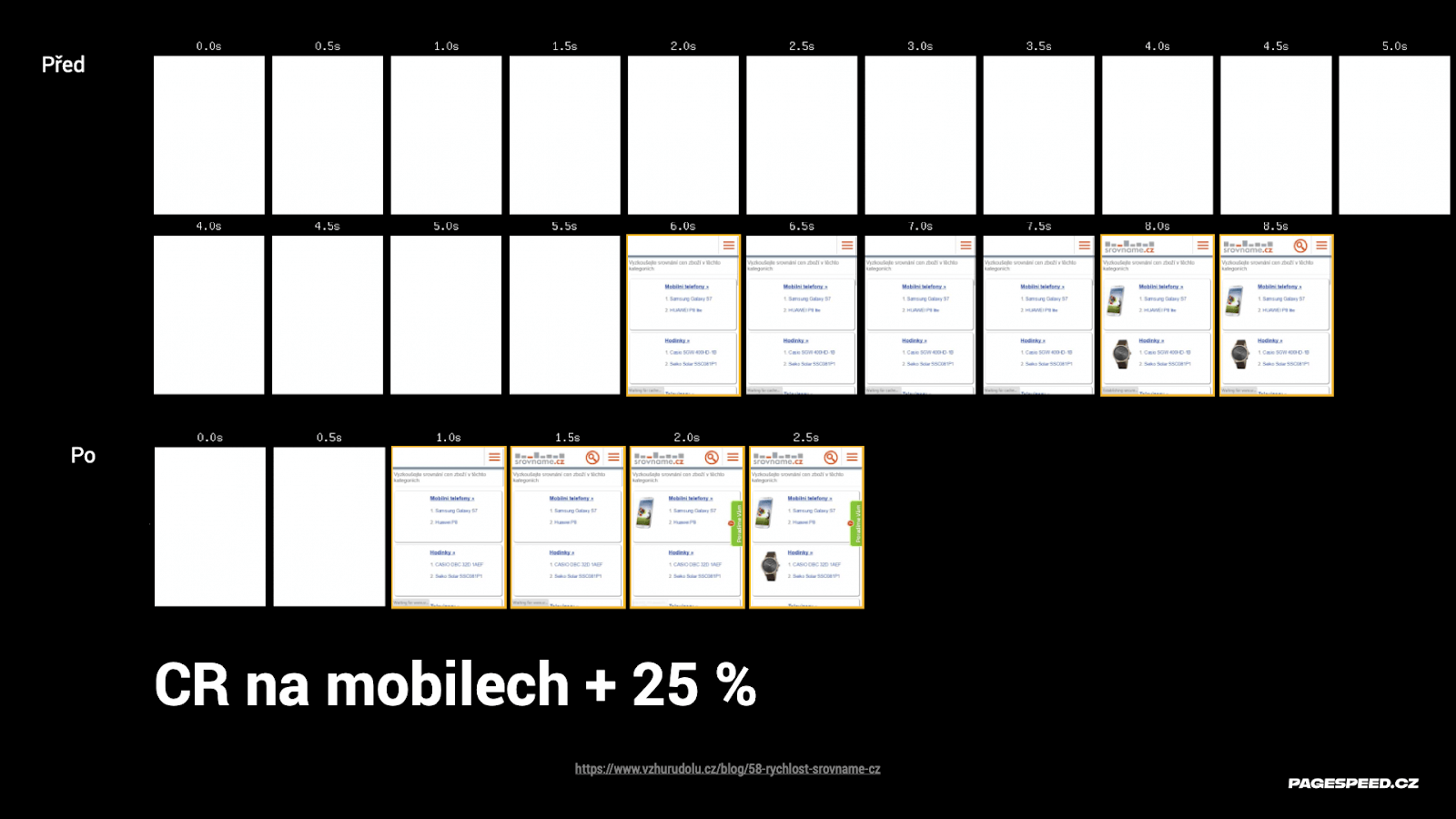 Czech e-shop comparator Srovname.cz was helped by our Martin Michálek to increase mobile conversion rate by 25% through speed optimisation - Source
- Deloitte Digital showed conversion growth for 37 brands' websites with just a 100 ms speed improvement. (Source)
- Walmart calculated back in 2012 that every second of homepage speed improvement increased their website conversions by 2%. (Source)
There's a wealth of case studies worldwide, nicely collected on wpostats.com.
As the numbers above illustrate, speed affects a wide range of important metrics. That's why Google folks decided to focus on this easily measurable aspect of user experience.
The Google Argument
We sometimes witness conversations like these:
— "Why do you want to address speed, anyway?"
— "Google wants us to."
This could lead to the impression that the entire field of web speed is built on the outputs of a few internal corporate meetings at Googleplex. We imagine several managers, engineers, and especially one large crystal ball would be present.
Google monitors the speed of nearly 8 million websites through the Chrome UX Report.
Are Google's recommendations on web speed built on thin air? Nothing could be further from the truth.
The world’s largest search engine employs outstanding experts in speed technology and researchers backed by data. A recent example is the text The Science Behind Web Vitals, which shows the data behind the recommendations for new metrics.
Google builds on data, and that data increasingly shows the connection between a good user experience and loading and interaction speed.
Web Vitals and Page Experience Signal
In a recent blog post, people at Google announced they are working on a new ranking signal, "Page Experience", where speed will play a significant role.
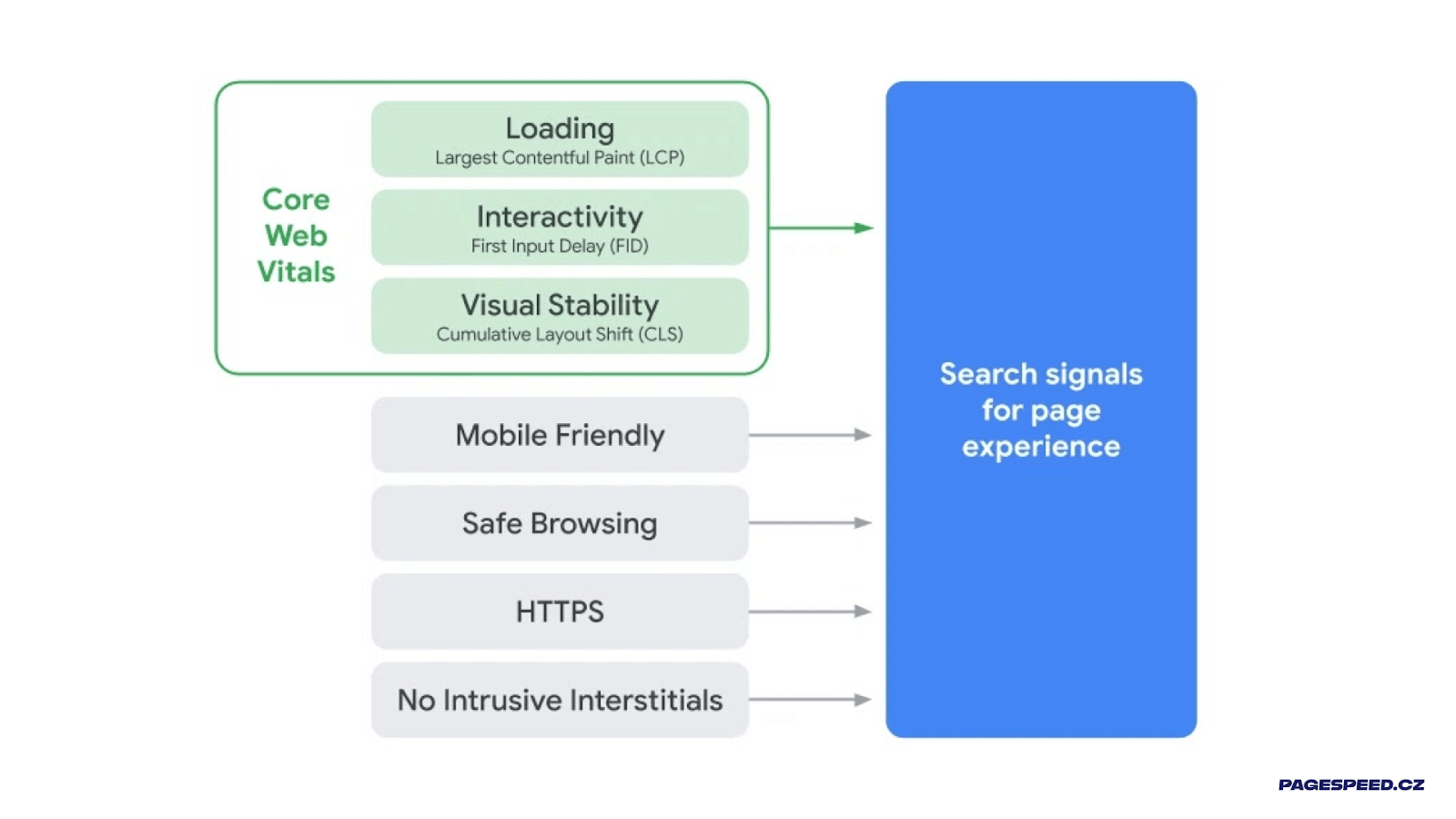 Google's "Page Experience" signal will focus on security, user experience, and speed.
This isn’t the first time the search engine has announced it will focus on speed. It's the first time it has straightforwardly stated how it will measure speed. It will focus on Web Vitals metrics, gathered directly from Chrome users and stored in the Chrome UX Report.
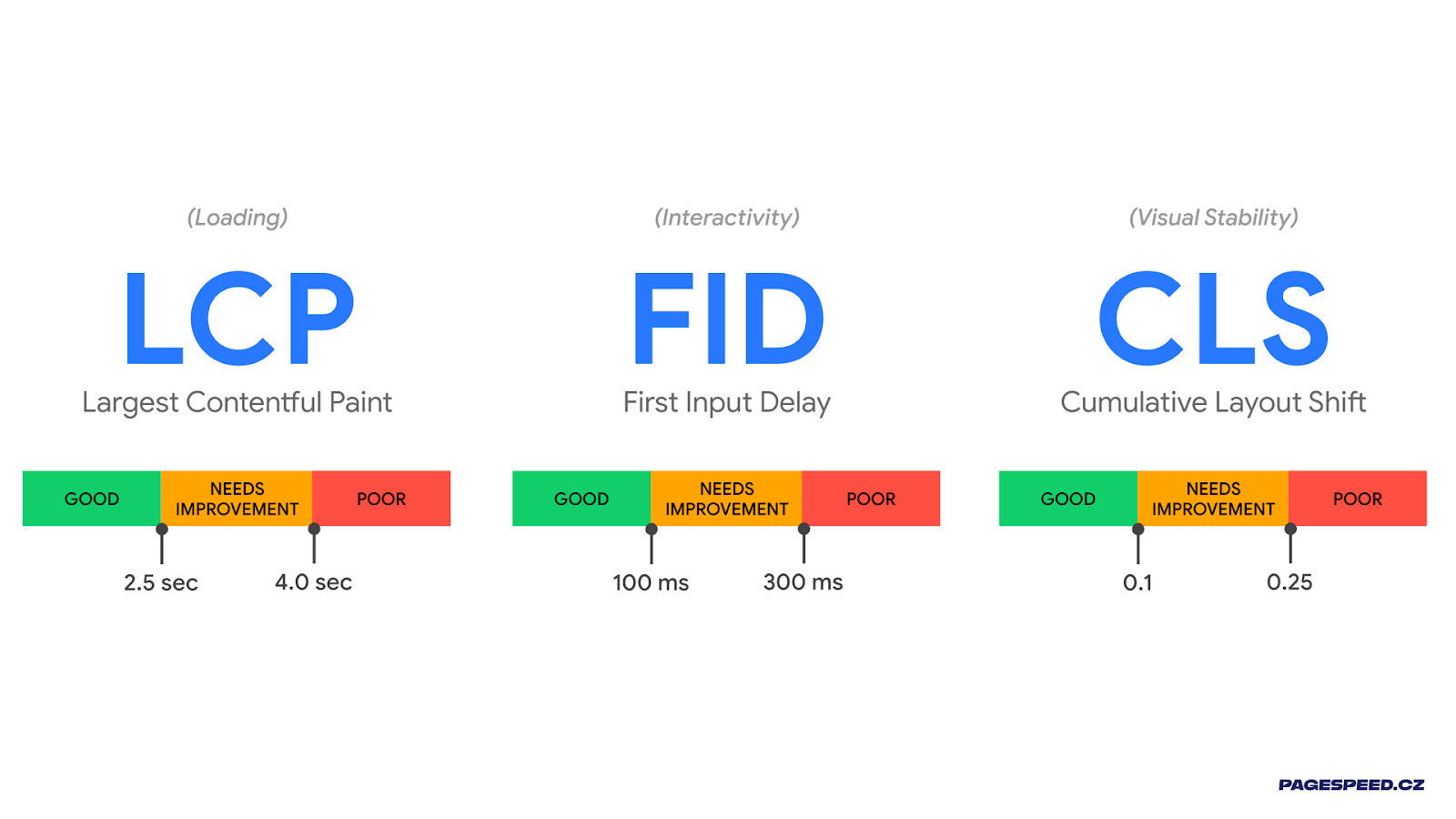 The most important speed metrics for every site – Core Web Vitals.
Google will roll out the new signal during 2021, so it doesn’t hurt to prepare.
We have a nice PDF guide on Web Vitals.
With our clients, we've already focused on Web Vitals. Let’s look at the individual metrics and supplement them with some of our successful optimisations.
 Core Web Vitals optimisation on Shoptet sped up the deNatura.cz e-shop and brought a +17% increase in Google traffic.
LCP (Largest Contentful Paint):
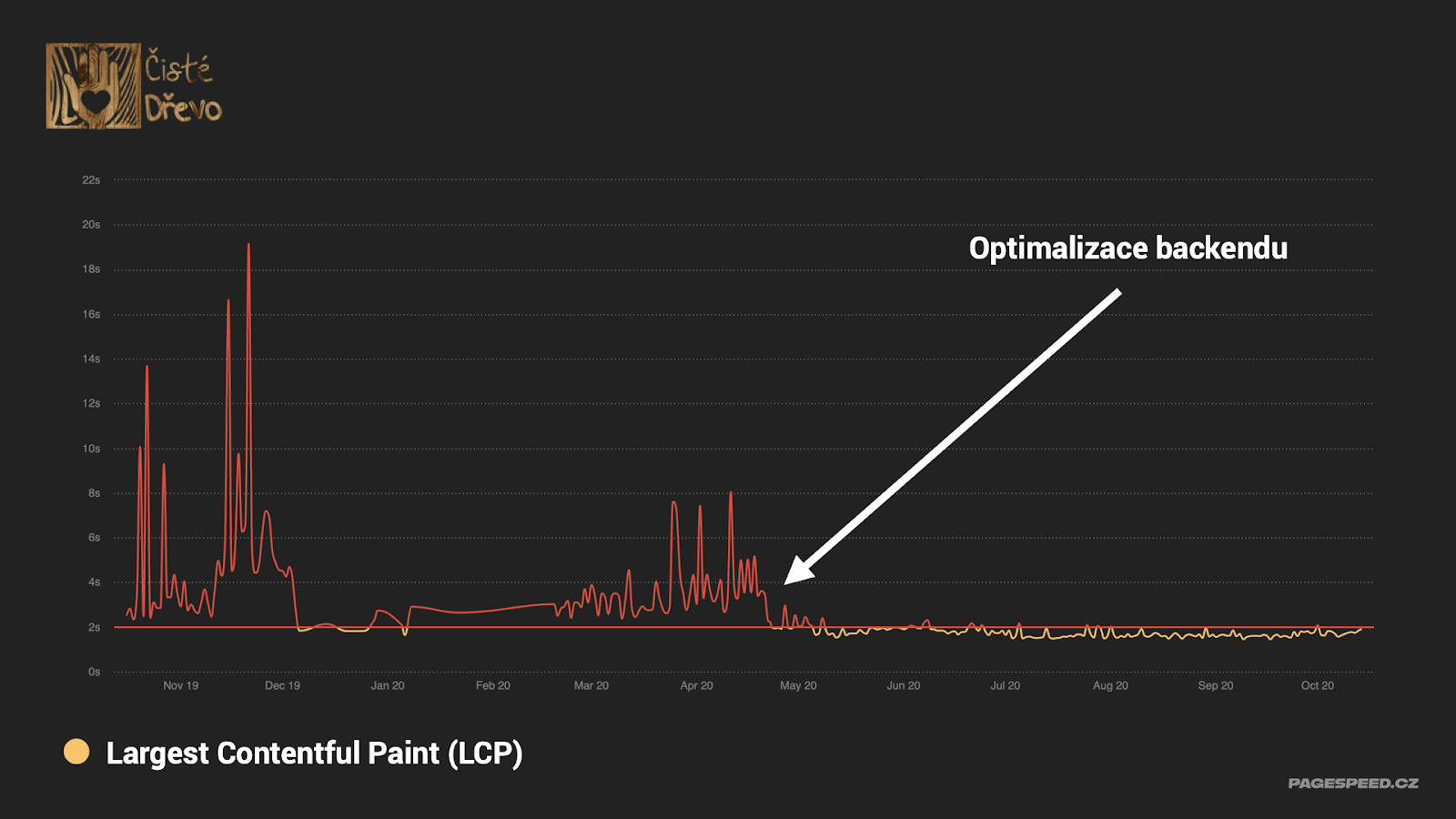 We helped the ČistéDřevo.cz e-shop identify backend issues. After adjustments, the LCP metric improved nicely.
INP (Interaction to Next Paint):
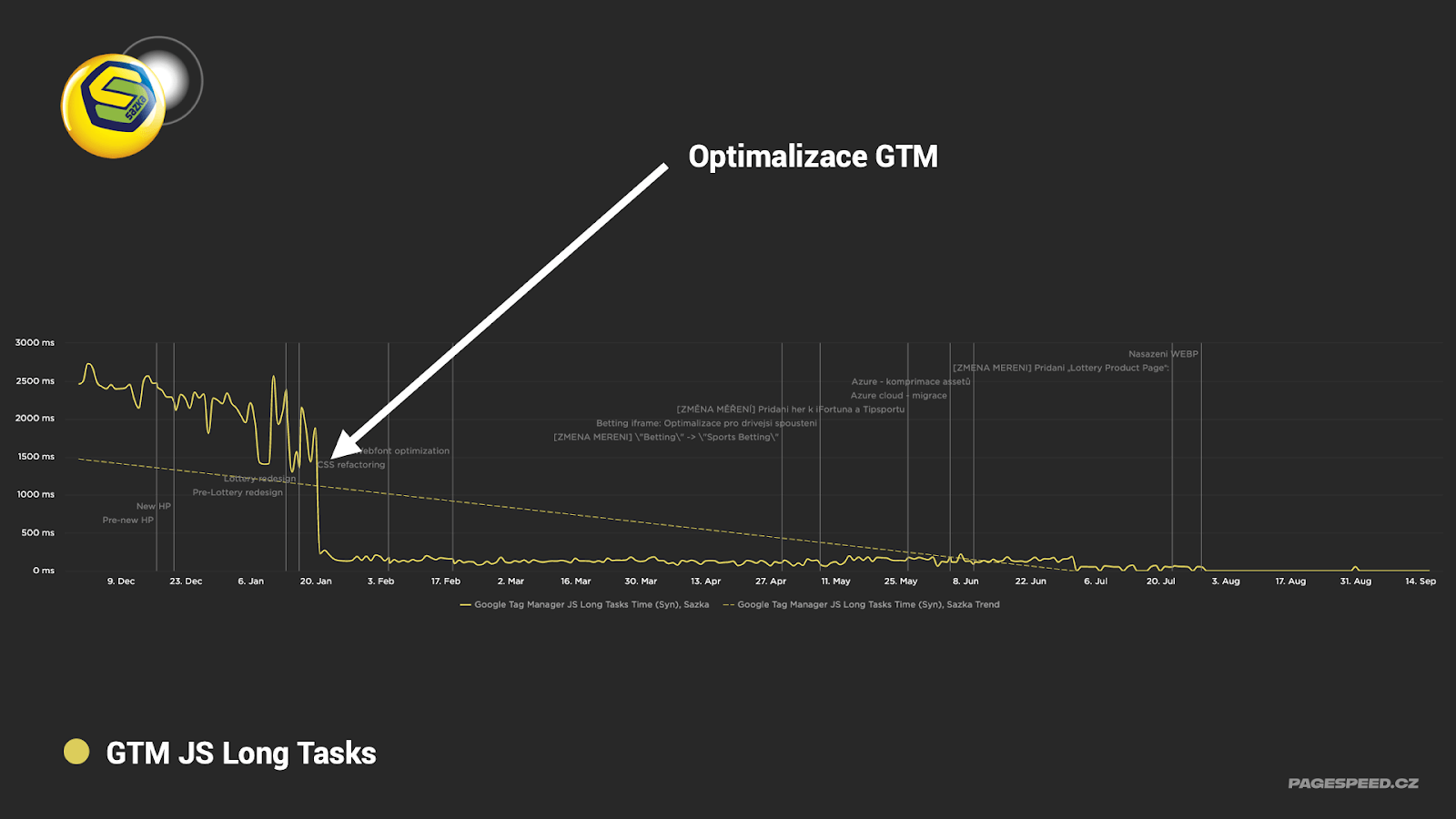 We helped Sazka identify JavaScript performance issues caused by Google Tag Manager code, negatively affecting the INP metric.
CLS (Cumulative Layout Shift):
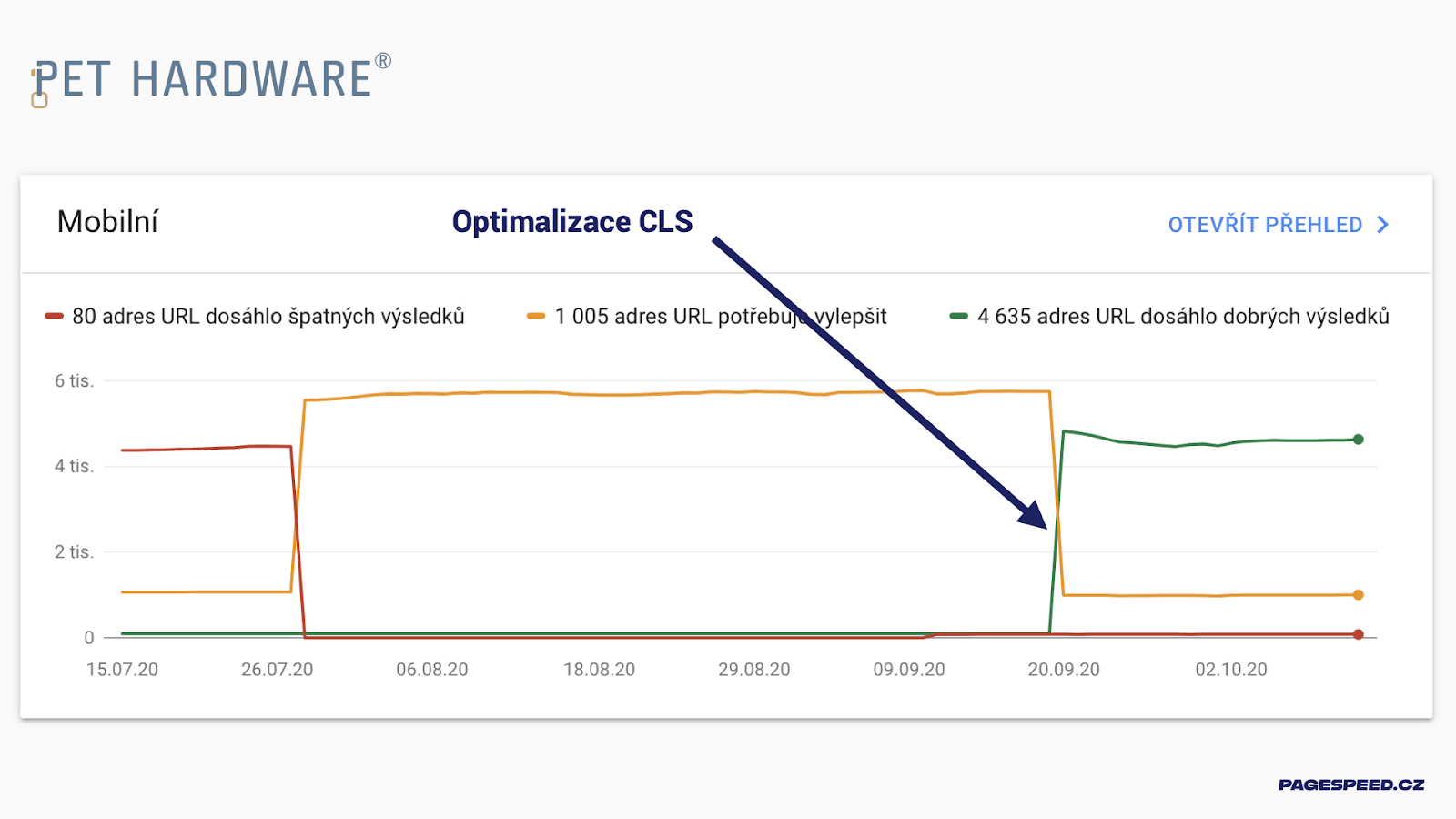 During our collaboration with Pet Hardware, Michal Matuška identified and removed issues with unwanted layout shifts during rendering.
Google Ads and Mobile Speed Score
If you invest in advertising run by Google, you surely know about Mobile Speed Score, which rates the speed of each target page for your campaigns.
The speed score affects the cost and position of your ads, so it’s definitely worth some attention.
During a phase of collaboration with our largest client, Livesport.cz, which offers a fast sports results service, our advice helped their excellent team significantly improve the first contentful paint (FCP) over six months: 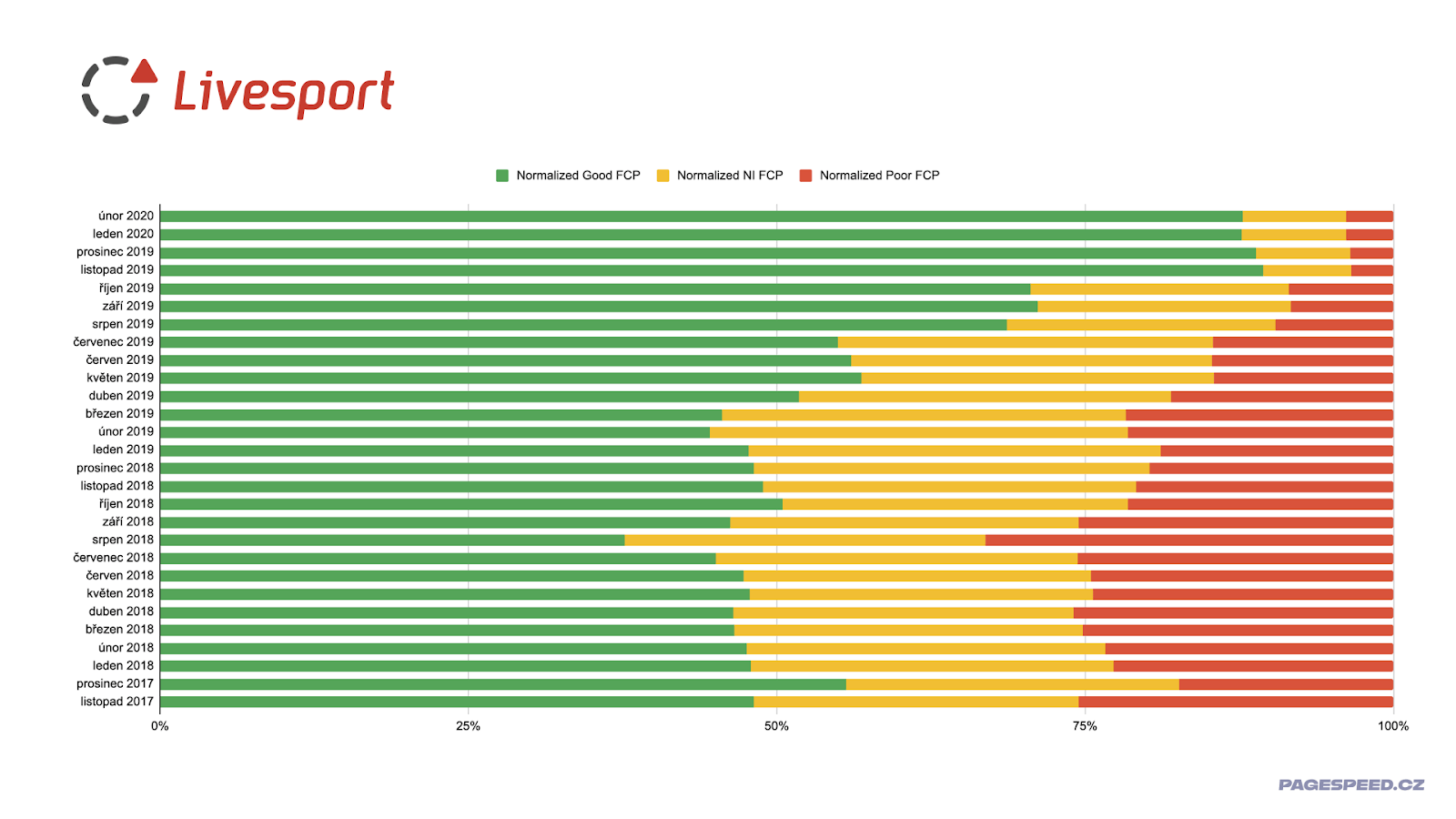 FCP metric development on Livesport.cz for users until February 2020.
The subsequent improvement in Speed Score in Google Ads was more than pleasing:
| August 2018 | January 2019 | |
|---|---|---|
| Europe | 4-7 | 9-10 |
| Japan | 1-2 | 10 |
| Africa | 1-2 | 6-7 |
| Australia | 1 | 7-9 |
| Brazil | 1-2 | 7 |
Impact on Search Engine Rankings
Before Google implements the Page Experience signal, discussions about the direct impact of web speed on SEO can be lengthy.
Speed cannot easily be isolated from other signals, and a study of speed's correlation with search engine rankings would require comparing practically identical websites. Once we find such sites, we’ll let you know.
Curious about our opinion? All Google communication clearly indicates they consider speed an important signal. Being significantly slower than your competition is not something we'd recommend.
However, if we set aside psychological and business reasons for speed and focus on SEO, the community agrees on one thing – it's good to have a fast server.
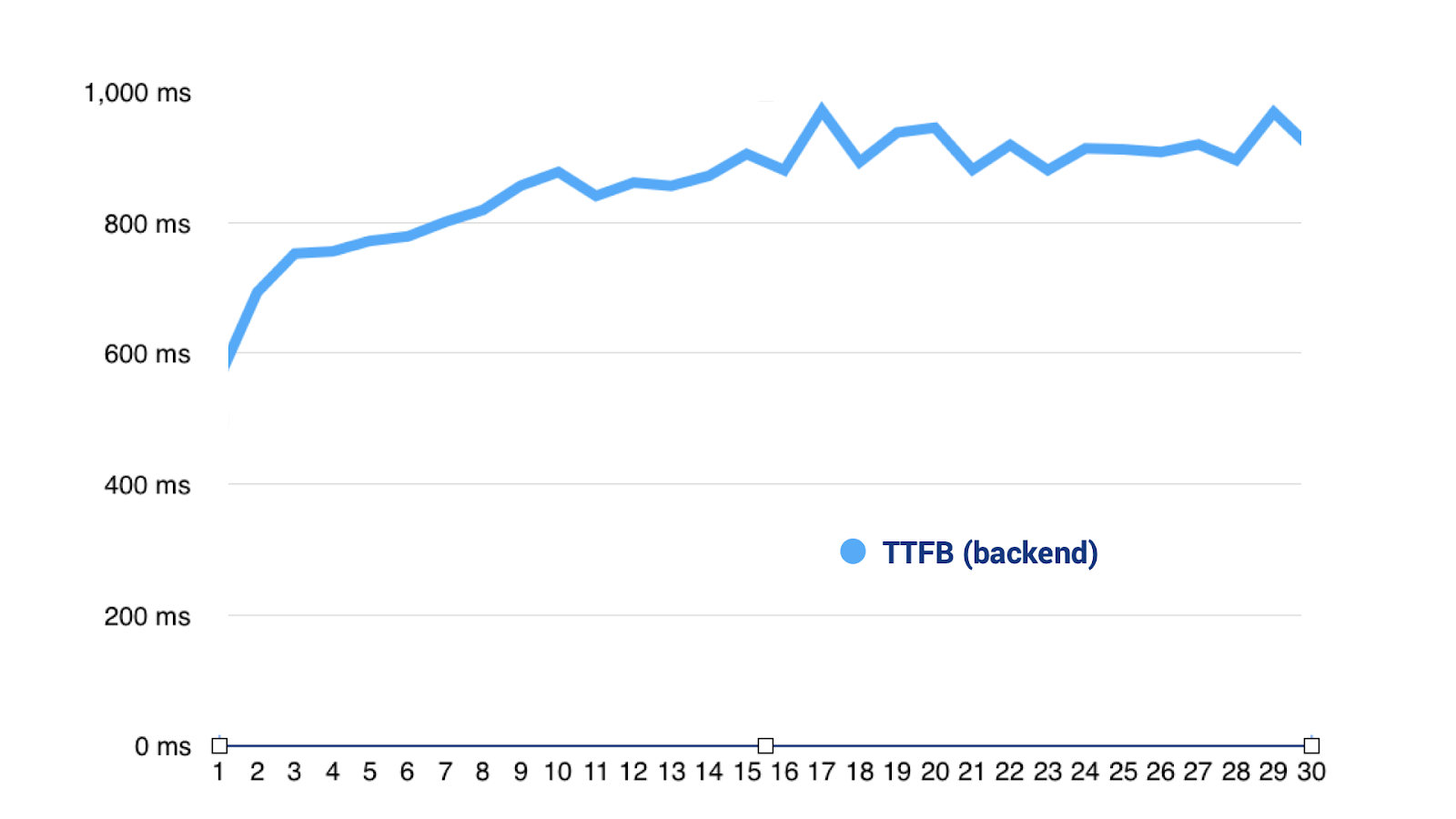 Correlation between TTFB (Time To First Byte) and Google rankings. - Source
The TTFB metric, essentially server and infrastructure speed, is crucial not only for the overall speed of a website but likely also for a page's search engine ranking and "crawl budget", the number of pages Google can process.
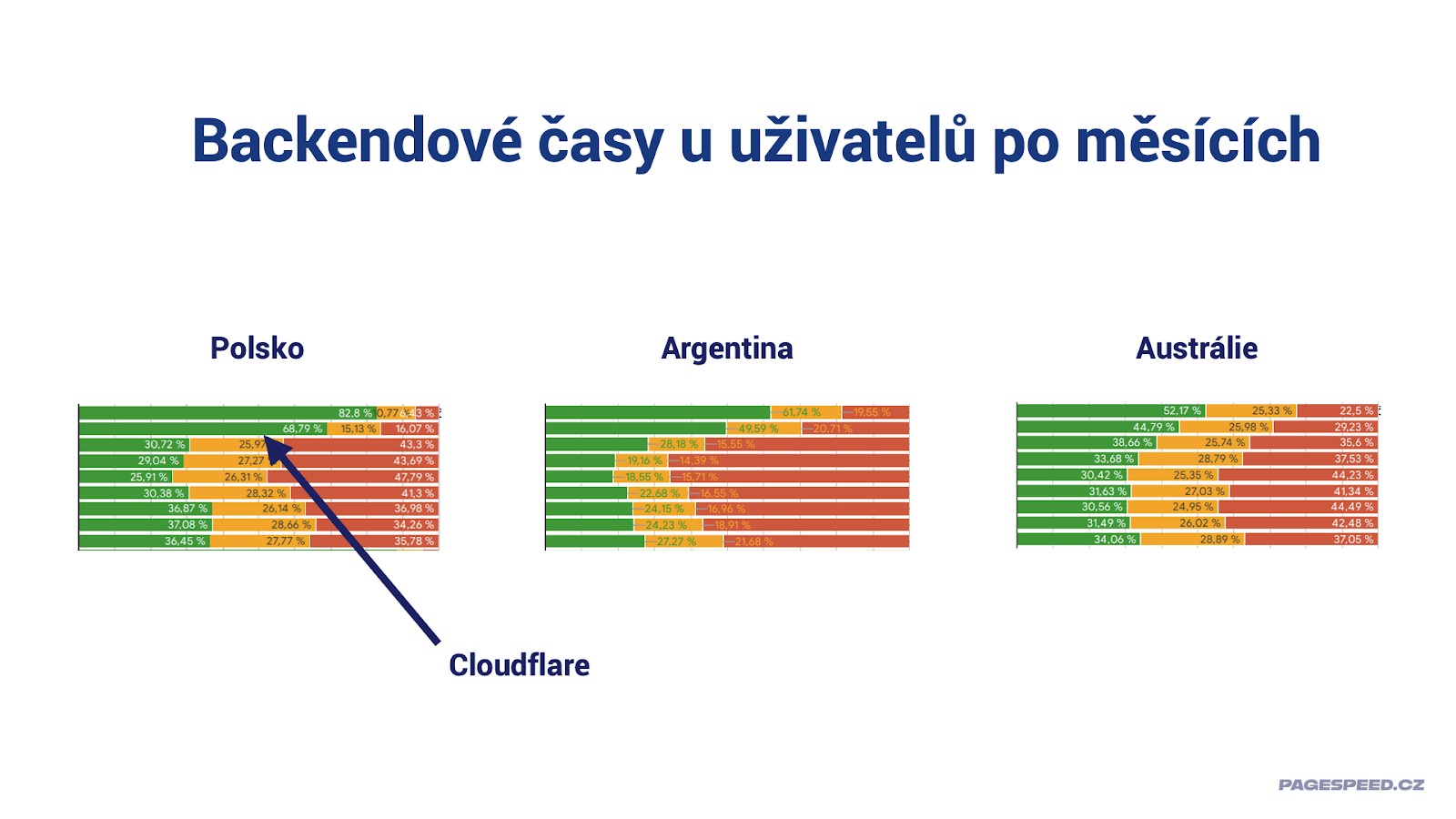 Our recommendation to focus on the backend significantly improved metrics for this globally operating client.
Server speed, as well as client-side code, obviously also affects another factor valued by search engines – Dwell Time, the time between clicking from search results to your page and returning back.
Backend optimisation is thus a crucial discipline.
How to Start Addressing Web Speed?
There are many ways to start. The process is always the same. The most important thing is to determine where you stand, monitor progress over time in various contexts, and identify the right opportunities for improvement:
- Measure your speed, ideally alongside your direct competition, with our web speed test.
- Regularly monitor your website's speed using monitoring.
- The tester will measure the speed of the tested websites daily, so save the URLs of your tests or sign up, and we’ll send you a status report monthly.
If you find you have room for improvement in speed, order a web speed audit that includes tailor-made advice for your project. Or simply get in touch – info@pagespeed.cz.
Data Over Promises
On Srovname.cz, mobile conversions increased by 25%. Read about our approach and the specific modifications that led to this in the case study.